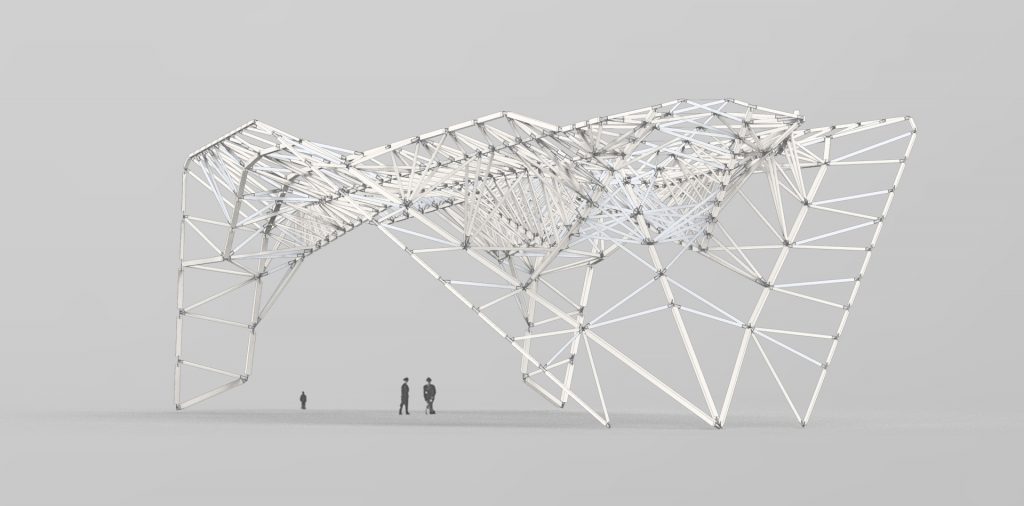
is my master thesis of the MAS in Architecture and Digital Fabrication at ETH Zürich.
Building non-regular structures of any kind, which deviate from the efficiency of industrialized production methods, is a difficult and expensive endeavor. With the development and rise in availability of consumer- and industrial-level additive manufacturing technologies it seems that, for the first time after an era of rapid industrialization, the production of unique building elements might become feasable again.
In order to enrich the toolbox for mass-customization and to open up the architectural design space a computational tool for creating 3d-printable nodes for non-regular timber space frames was developed. The tool handles the geometric and logistic complexity and provides the user directly with the necessary data for production. This enables the designer to spend more time on exploring the wide range of structural possibilities and focus on developing unique and aesthetically interesting compositions.
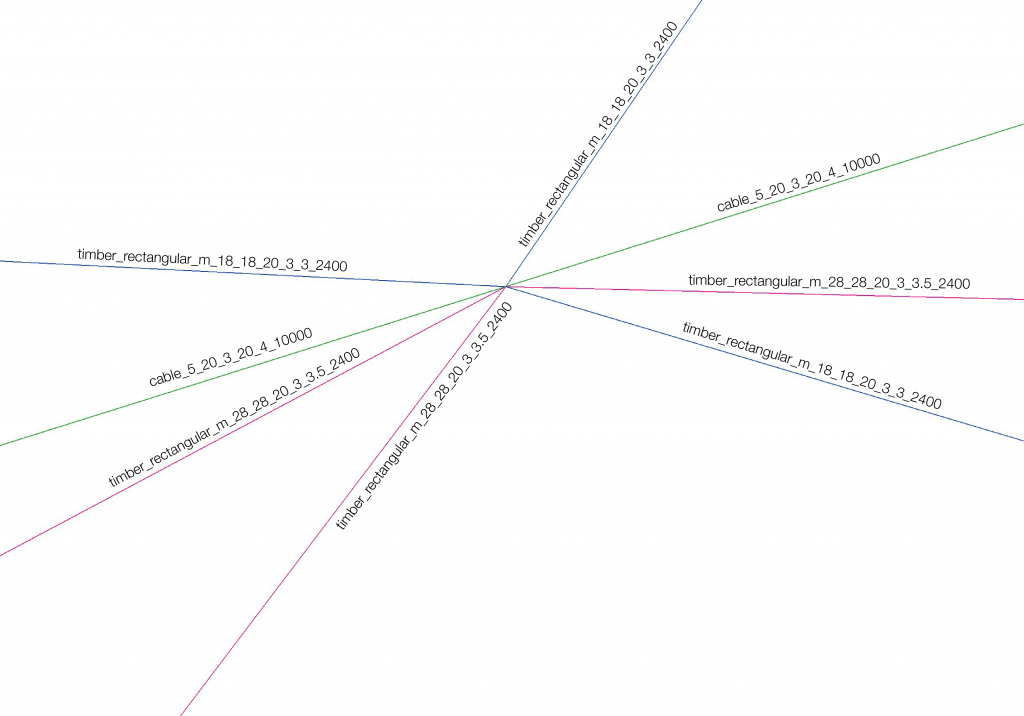
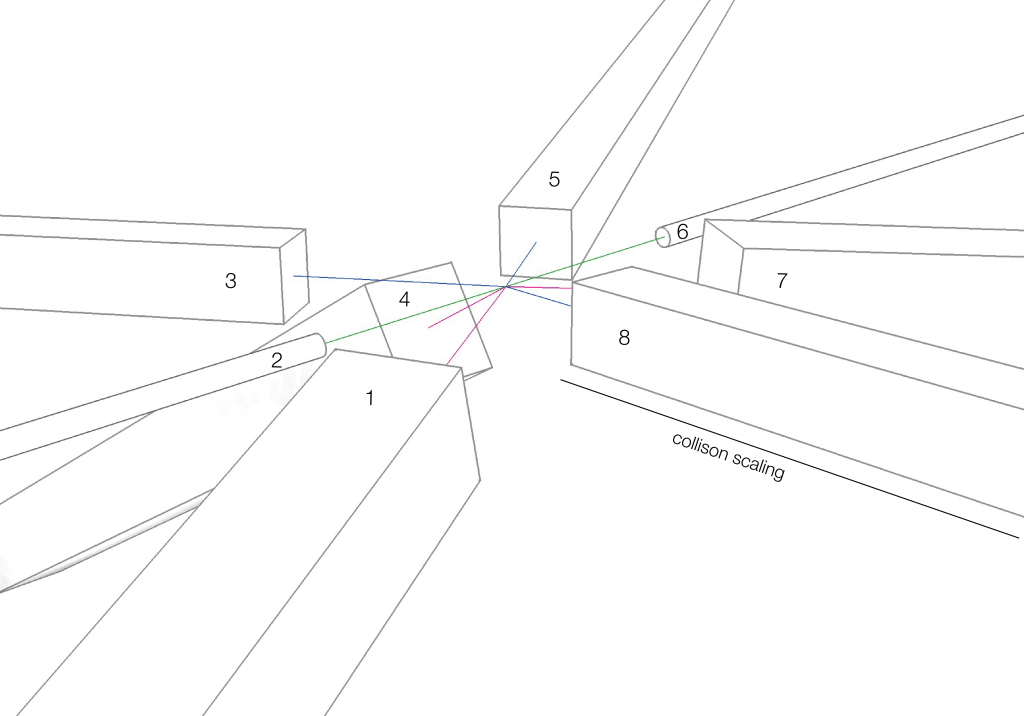
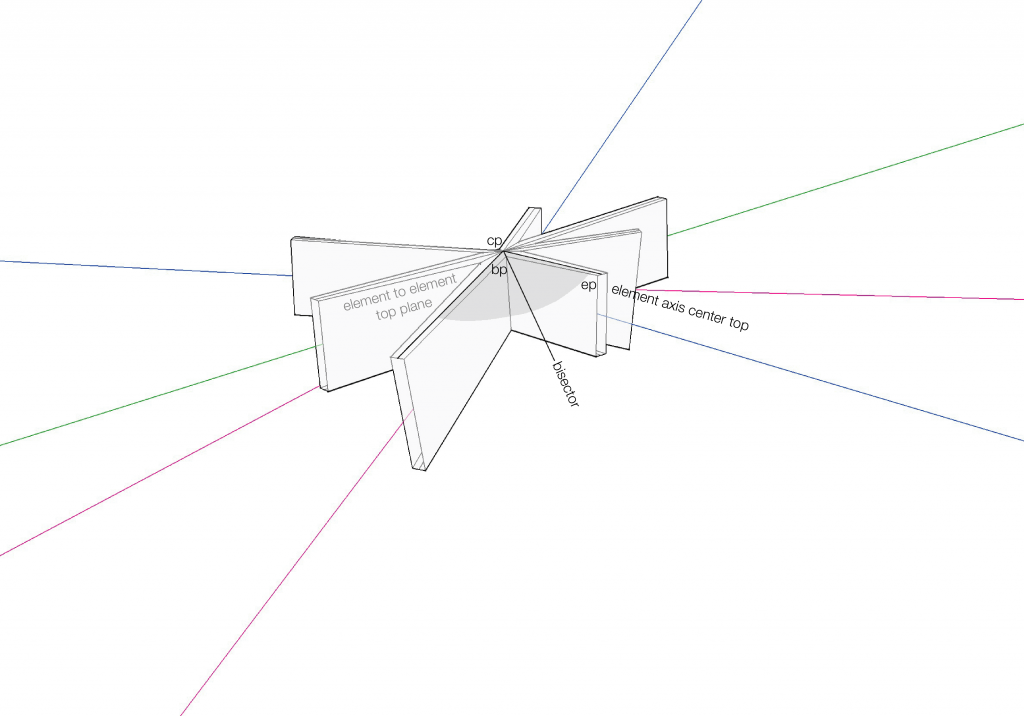
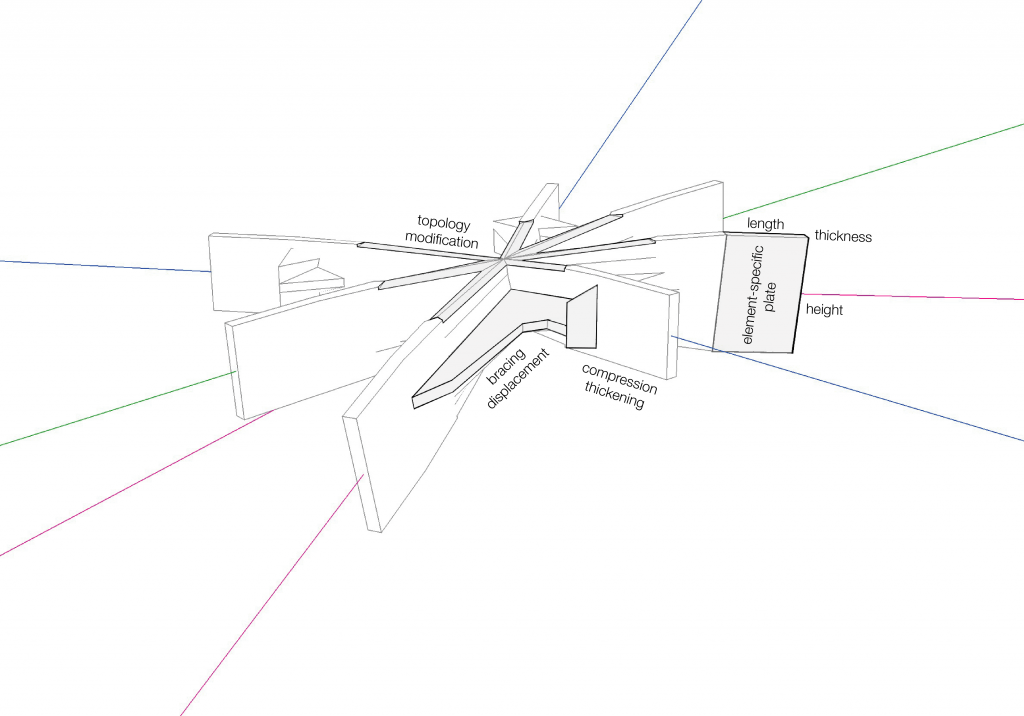
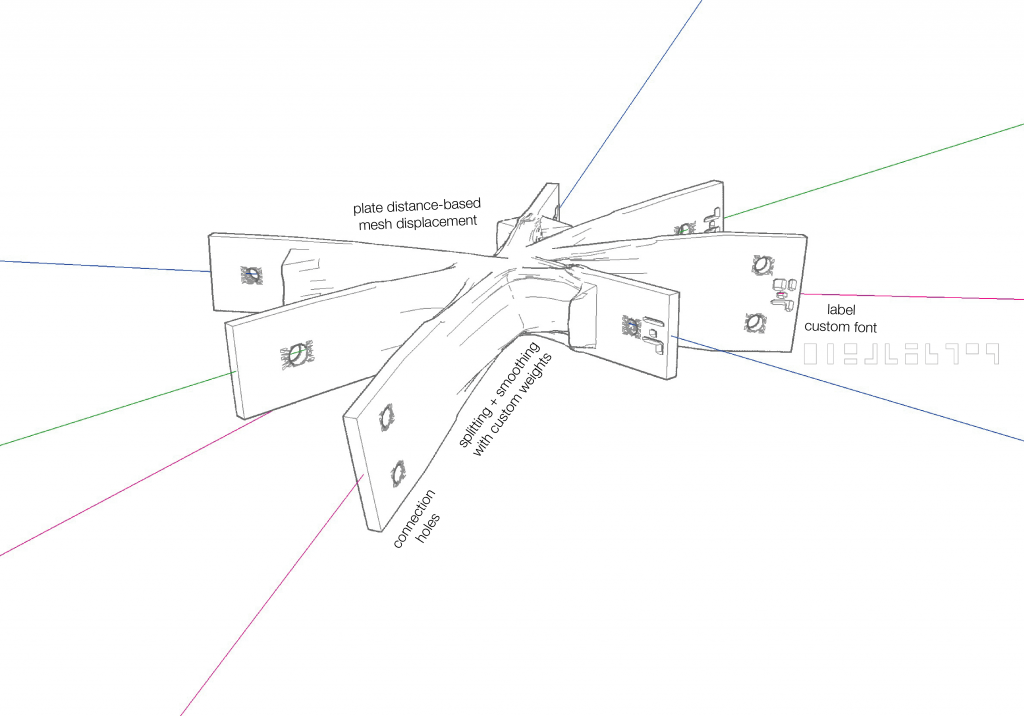
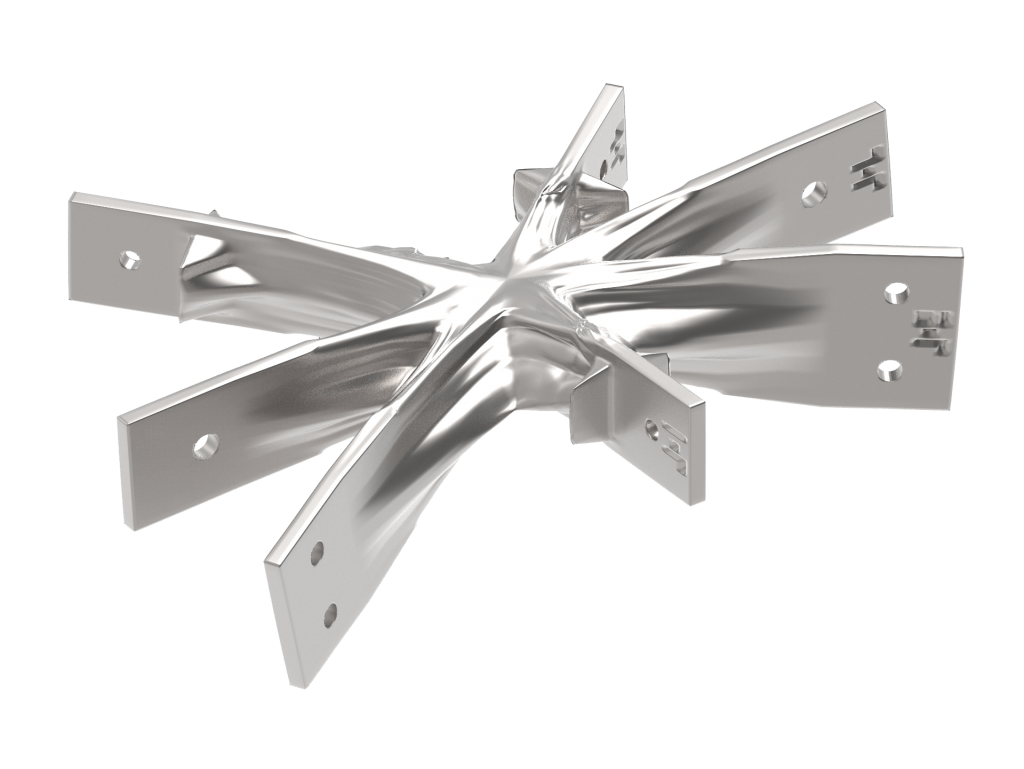
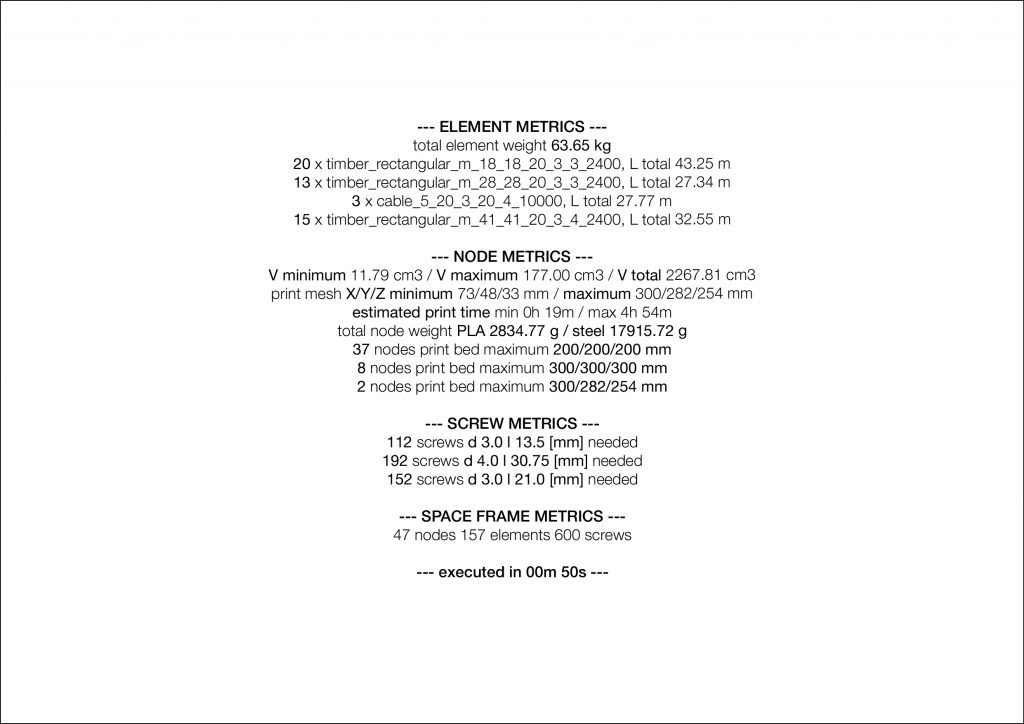
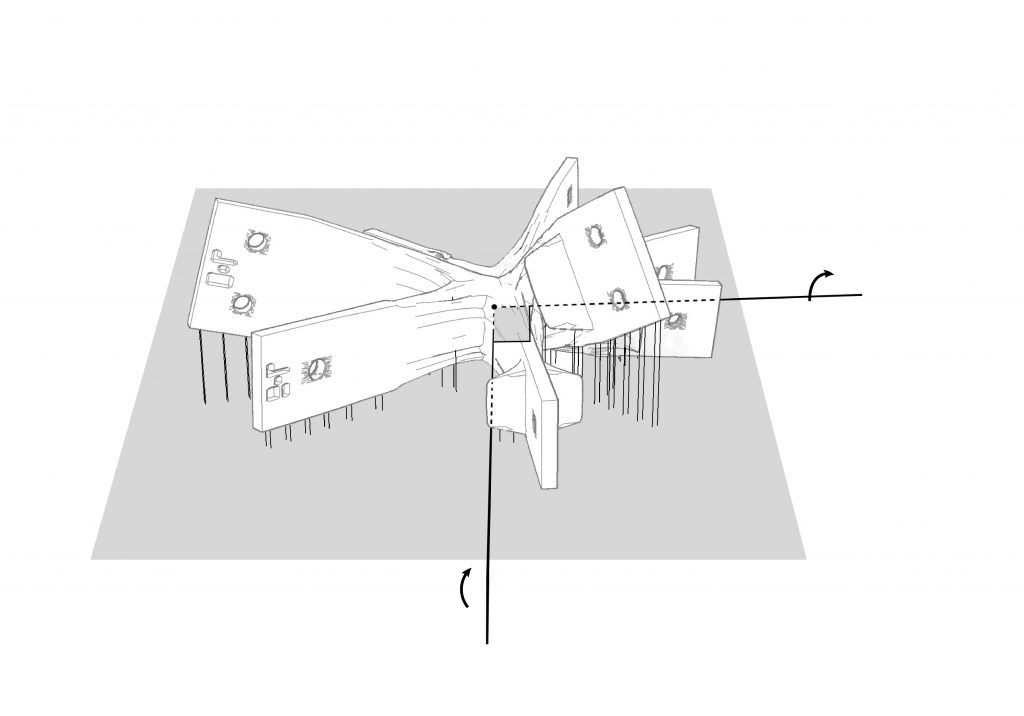
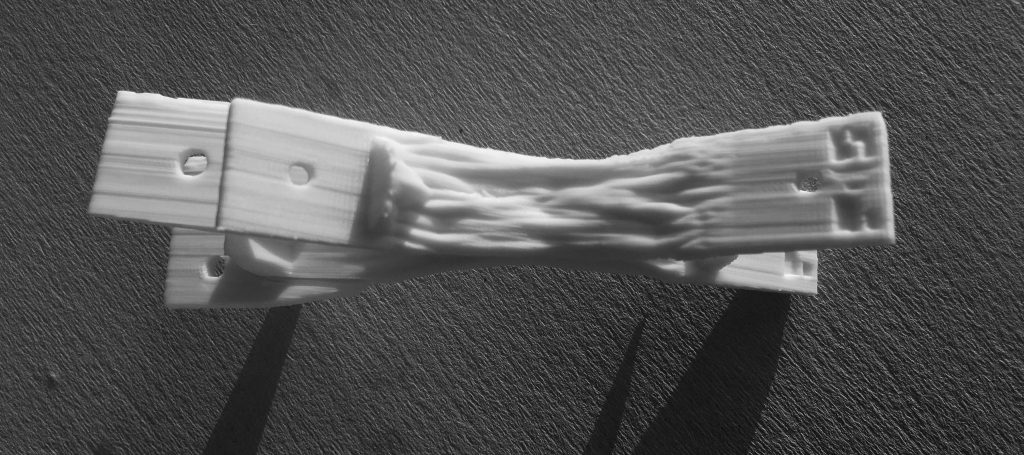
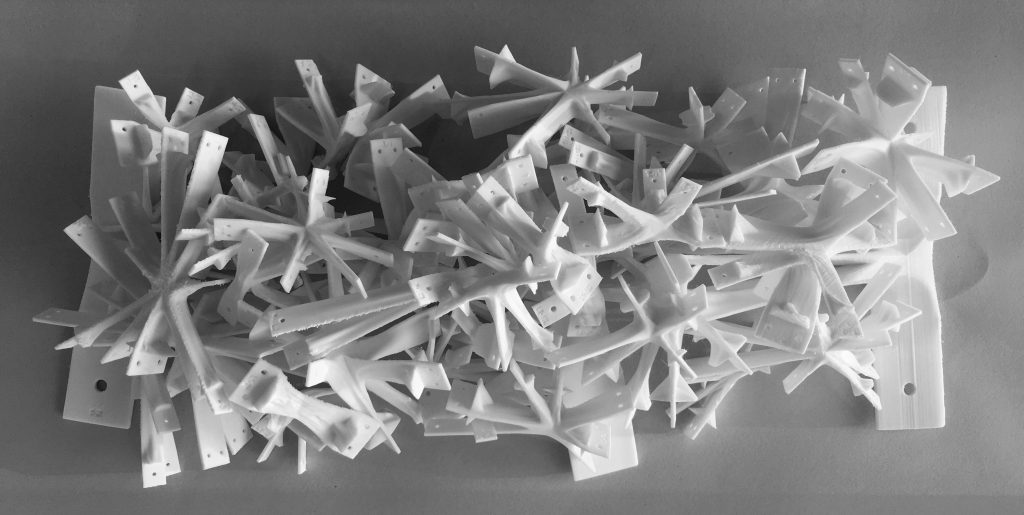
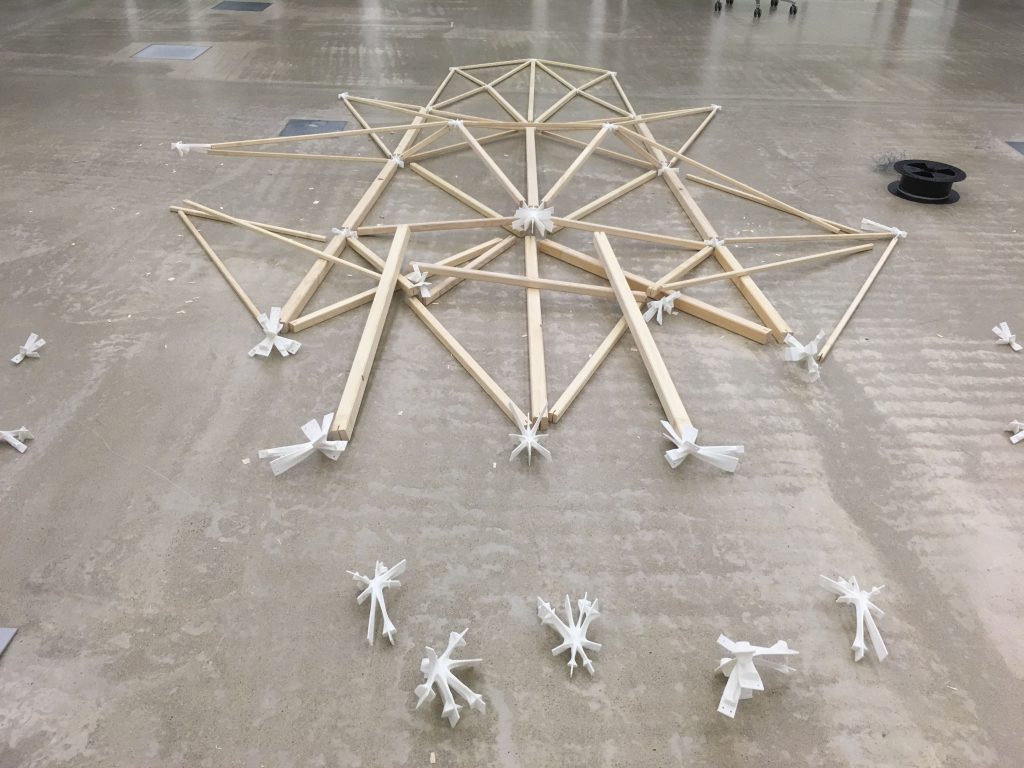
The algorithmic system creates printable node geometries from a line network with embedded profile information. Plates in conjunction with screws were chosen as an element connection detail, due to the widespread use of this technique in many different materials. The created nodes have several useful features such as hierarchy dependent bracing between the node’s branches, compression thickening, labelling, custom subdivision, mesh articulation through mesh displacement during subdivision and topology modification. The algorithm computes a locally optimal print orientation for FDM printing by analyzing the cumulative needed support. Furthermore it provides the user with all the necessary information for sourcing the material for constructing the desired design and for preparing the used elements for assembly.
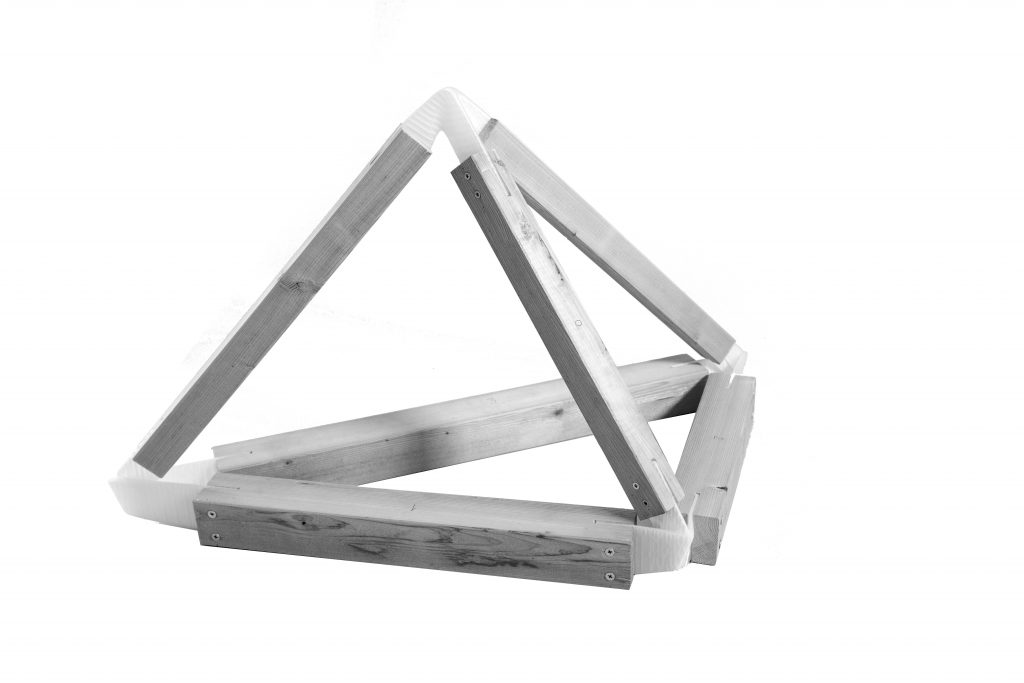
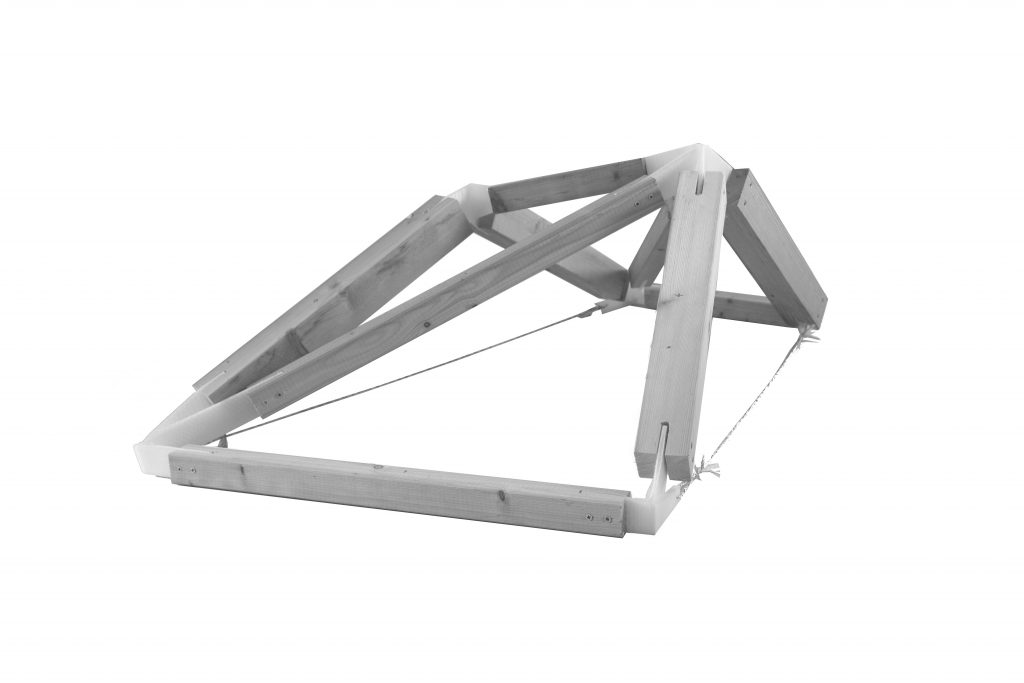
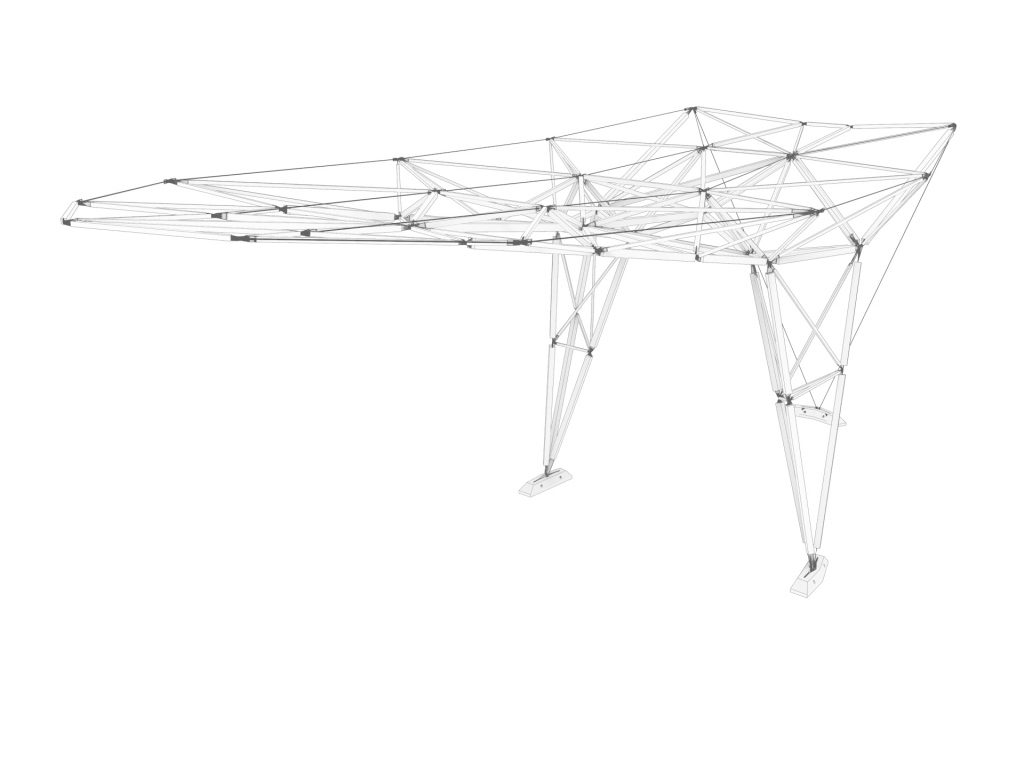
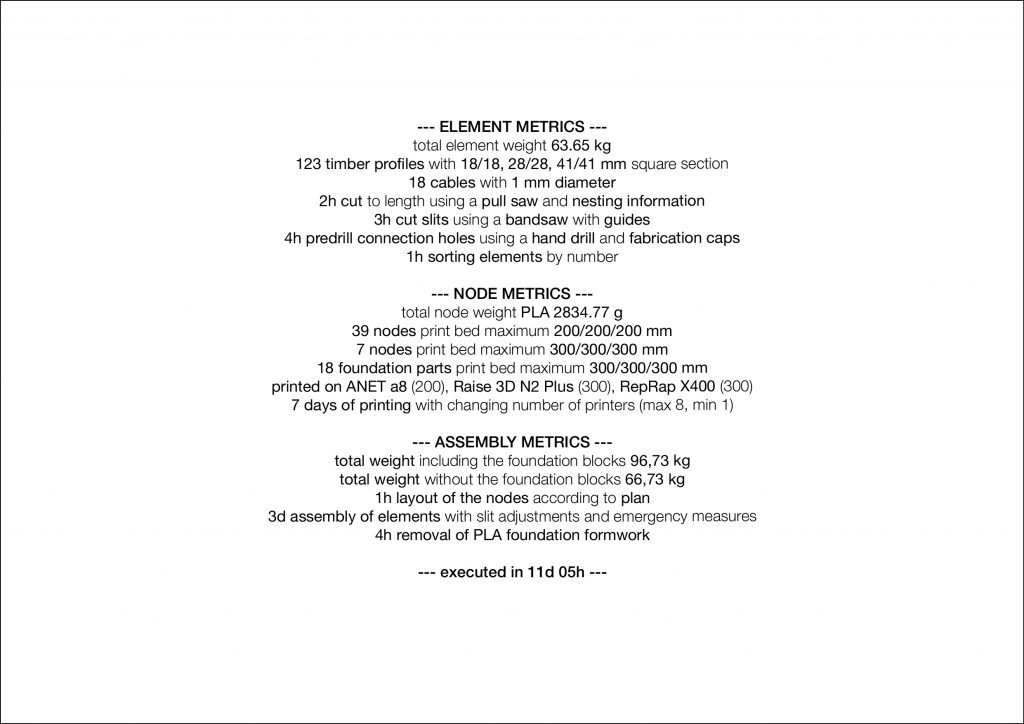
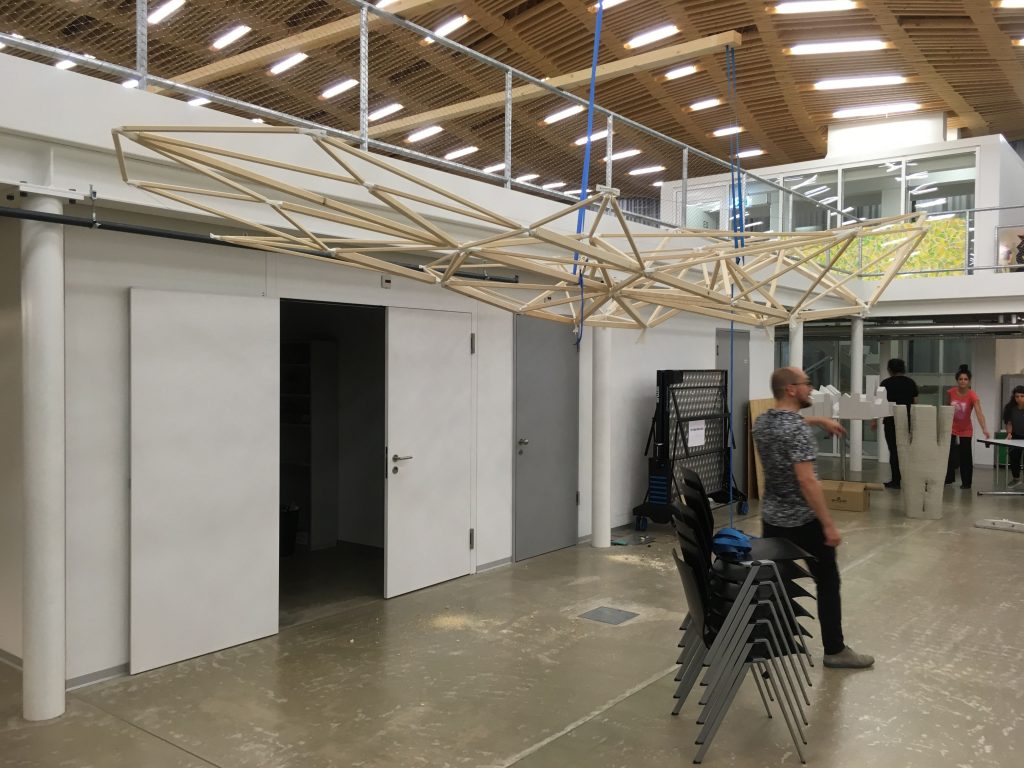
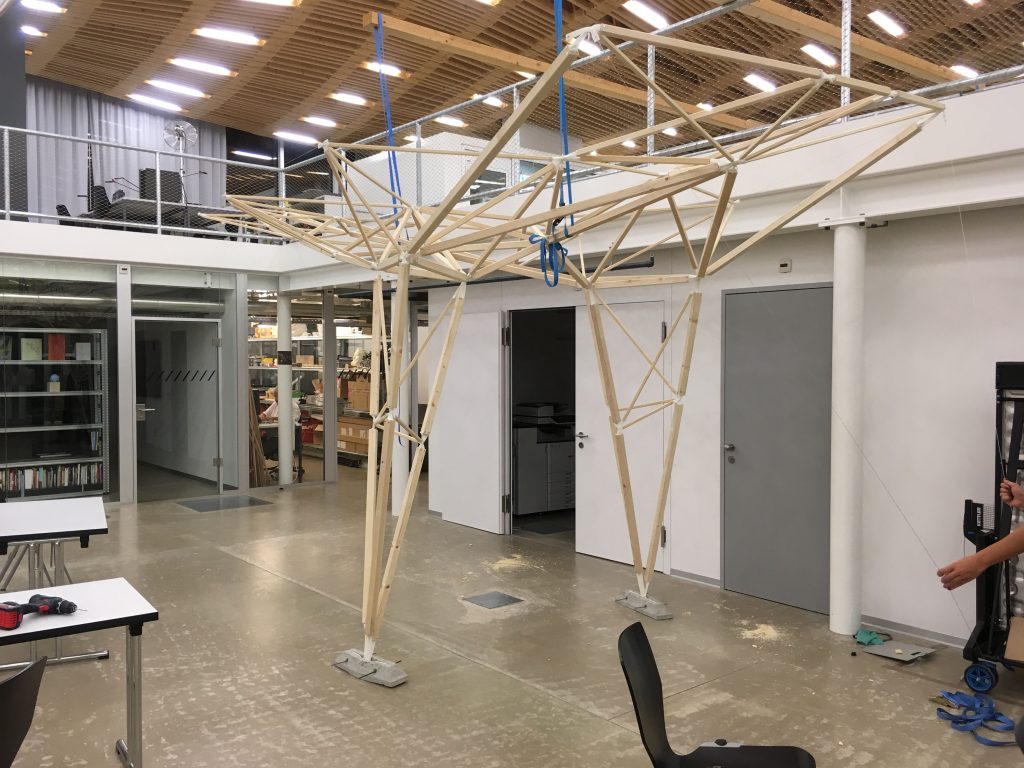
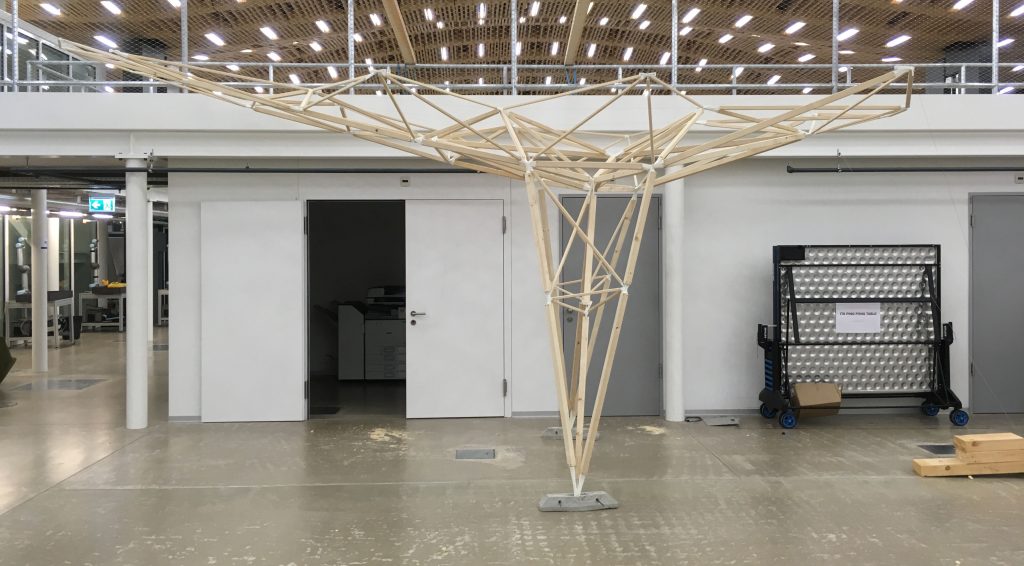
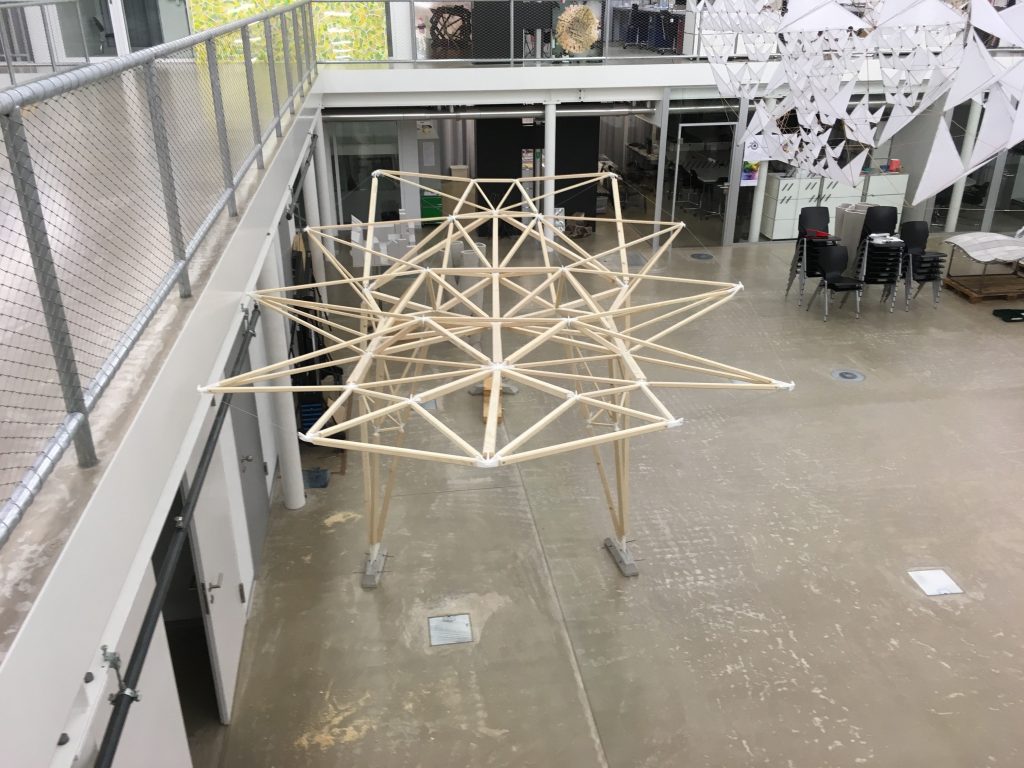
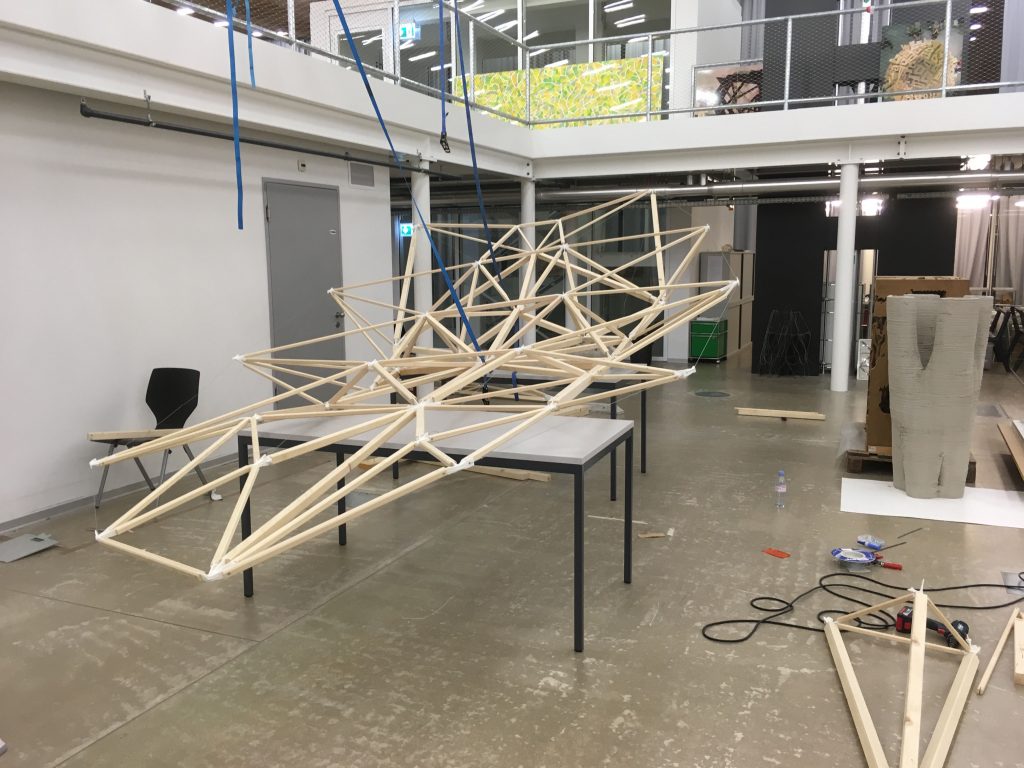
This system was tested with several digital as well as physical tests. Three prototypes were built and many test nodes were printed. Prototype 3 was a structure measuring 6,3*2,7*2,8 m in its extents. It was completed in 11 days including printing all nodes with PLA using FDM printing and preparing the timber elements for assembly. Unfortunately the structure only stood for one hour. It collapsed after moving it seven meters, due to the introduction of too many torsional forces into the system caused by deviations in the foundation positions during moving.